

Carded vs Combed Cashmere Yarn: Which Type Is Better? (2026 Guide)
Not all cashmere is created equal — and the differences go far deeper than fiber grade or goat breed. One of the most important yet least discussed factors in cashmere quality is how the yarn itself is constructed.
Two dominant processing methods — carding and combing — shape everything from how a garment feels against your skin to how well it holds up after years of wear.
Understanding the distinction between carded and combed cashmere yarn helps buyers, designers, and brands make smarter decisions. Whether you’re sourcing yarn for a cozy winter collection or a refined fine-gauge luxury line, knowing which process suits your goals can mean the difference between a product that delights and one that disappoints.
In this guide, you’ll learn exactly how carded and combed cashmere yarns are made, how they differ in texture, warmth, durability, pilling resistance, and appearance, and which type is best suited for specific garment categories and brand strategies.
Quick Comparison: Carded vs Combed Cashmere
| Feature | Carded Cashmere | Combed Cashmere |
|---|---|---|
| Softness | Fluffy & Plush | Smooth & Silky |
| Warmth | Excellent | Very Good |
| Pilling | More Likely | Less Likely |
| Durability | Good | Excellent |
| Best For | Sweaters, Scarves, Throws | Fine Knitwear, Cardigans |
What Is Cashmere Yarn?
Cashmere yarn is a luxury textile fiber spun from the soft undercoat of cashmere goats, primarily raised in the high-altitude regions of Mongolia, China, Iran, and Afghanistan. The extreme cold of these environments encourages the goats to develop an exceptionally fine and insulating undercoat, which is harvested each spring through combing or shearing.
What makes cashmere so prized is its combination of fineness, softness, and insulating power. The finest cashmere fibers measure between 14 and 19 microns in diameter — far finer than standard wool — which is why cashmere garments feel so extraordinarily soft against the skin.
However, raw cashmere fiber alone does not determine final garment quality. Fiber length, cleanliness, and — critically — how the fiber is processed into yarn all play defining roles. Two garments made from the same raw cashmere can feel and perform very differently depending on whether carding or combing was used in production. Understanding cashmere yarn quality at this level is what separates informed buyers from those who rely on brand names alone.
Understanding the Cashmere Fiber Processing Journey
From Raw Fiber to Finished Yarn
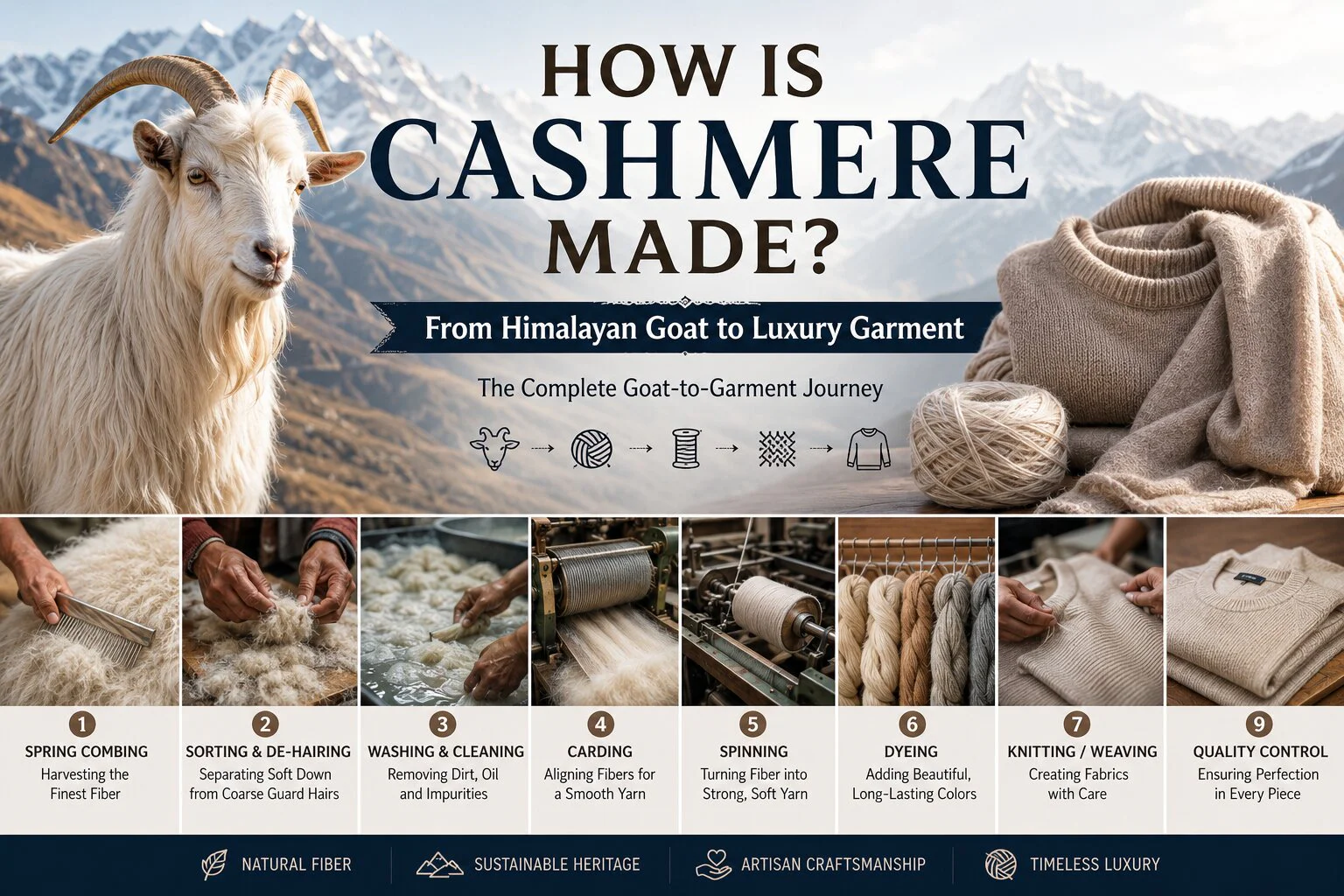
Before cashmere becomes the yarn that ends up in your sweater, it travels through several essential stages of cashmere fiber processing.
Dehairing and Sorting: Raw cashmere fleece contains both the fine undercoat fibers and coarser guard hairs. Dehairing removes these guard hairs through mechanical and sometimes hand-sorting processes. The higher the purity after dehairing, the softer the resulting yarn.
Cleaning and Preparation: The dehaired fiber is washed to remove dirt, grease, and vegetable matter. After drying, it is loosened and opened to prepare for the next stage.
Carding or Combing: This is the pivotal fork in the road. After cleaning, the fiber goes through either carding or combing — two fundamentally different mechanical processes that determine the yarn’s ultimate structure, character, and performance. This stage is where cashmere yarn manufacturing decisions have the most profound impact on the finished product.
Spinning: The prepared fiber is then drawn out and twisted into yarn. The spinning method (ring spinning, open-end spinning, etc.) adds another layer of variation, but the carding or combing stage has already established the yarn’s essential nature.
What Is Carded Cashmere Yarn?
How Carded Cashmere Yarn Is Made
Carding involves passing the cleaned cashmere fibers through a series of wire-covered rollers or drums that brush the fibers and align them in a general direction, but not rigidly so. Crucially, carding does not separate short fibers from long ones — both remain mixed together in the resulting fiber web, called a sliver. This sliver is then spun into yarn with a relatively open, airy twist.
The result is a yarn that is voluminous, lofty, and slightly irregular — full of tiny air pockets that give it its characteristic fluffiness. This is among the most traditional approaches in cashmere yarn manufacturing and remains widely used for classic knitwear categories.
Characteristics of Carded Cashmere Yarn
Carded cashmere yarn has a distinctly soft, fluffy texture that many people associate with classic cashmere luxury. Its surface has a gentle haze — a fine fuzziness that contributes to its plush appearance and feel. The yarn itself is lightweight relative to its volume, and because of all those trapped air pockets, it creates garments that feel warm without feeling heavy.
The overall aesthetic of carded cashmere is relaxed and organic. Stitch definition is softer and less precise, giving garments a casual, cozy character rather than a tailored one.
Advantages of Carded Cashmere Yarn
The warmth-to-weight ratio of carded cashmere is exceptional. A relatively thin carded cashmere sweater can provide insulation comparable to much heavier fabrics, making it ideal for cold-weather dressing without bulk. The softness is immediate and pronounced — this is the type of cashmere that prompts people to reach out and touch it in stores. For traditional cashmere products — chunky cashmere sweaters, scarves, blankets and throws — carded yarn delivers the cozy, enveloping quality that defines the archetype.
Potential Drawbacks
Carded cashmere’s greatest weakness is pilling. Because shorter fibers remain in the yarn, they tend to loosen with friction during wear and washing, forming the small fiber balls known as pills on the surface. While pilling can be managed with proper care, it is an inherent tendency of carded yarn rather than a defect.
The less structured surface also means carded cashmere garments have a more relaxed look that may not suit every design context. For brands seeking refined, tailored aesthetics, carded yarn may not always be the right choice.
What Is Combed Cashmere Yarn?
How Combed Cashmere Yarn Is Made
Combing takes fiber preparation a significant step further than carding. After an initial carding pass to open and align the fibers, the fiber is run through a combing machine fitted with fine metal teeth. This process serves two purposes: it further straightens and parallelizes the fibers, and it removes shorter fibers — called noils — leaving only the longer, more uniform fibers behind.
The resulting fiber bundle, called a top, is far more consistent in fiber length and alignment than a carded sliver. When spun into yarn, combed cashmere produces a smoother, more tightly organized structure. This additional step is a hallmark of precision cashmere yarn manufacturing and is a primary driver of higher yarn cost.
Characteristics of Combed Cashmere Yarn
Combed cashmere yarn has a clean, polished surface with markedly less fuzz than its carded counterpart. The longer fibers lie more parallel and flat, giving the yarn a smooth hand and a refined visual clarity. Stitch definition in knitted fabrics is sharper and more architectural. The yarn is slightly more compact and dense, lending a sense of structure and strength.
Garments made from combed cashmere tend to look more formal and tailored. The surface is less likely to develop visible haze during wear, maintaining its pristine appearance over time.
Advantages of Combed Cashmere Yarn
Durability is the headline advantage of combed cashmere. By removing the short fibers most likely to migrate to the fabric surface and pill, combing significantly improves the yarn’s long-term performance. Combed cashmere garments typically hold their shape and surface appearance better through repeated wear and careful laundering.
The smooth, refined surface is also better suited to fine-gauge knitting, where stitch clarity and clean lines are essential. For high-end fashion collections, luxury cardigans, and premium layering pieces, combed cashmere delivers the polish that discerning customers expect.
Potential Drawbacks
Combed cashmere sacrifices some of the lofty fluffiness that makes carded cashmere so immediately irresistible. The yarn is slightly denser and less voluminous, which means garments may feel marginally less cloud-like on first touch — though they remain undeniably luxurious by any standard.
The combing process also removes a meaningful percentage of fiber (the short noils), which increases raw material waste and adds production time. These factors combine to make combed cashmere yarn generally more expensive than carded, a cost that eventually flows through to the retail price of finished garments.
Carded vs Combed Cashmere Yarn: Full Comparison
| Feature | Carded Cashmere | Combed Cashmere |
|---|---|---|
| Texture | Soft and fluffy | Smooth and refined |
| Appearance | Fuzzy and relaxed | Clean and elegant |
| Warmth | Very high | High |
| Durability | Moderate | Higher |
| Pilling Resistance | Lower | Better |
| Weight | Lightweight and lofty | More compact |
| Cost | Often lower | Often higher |
| Best For | Cozy winter knitwear | Luxury fine-knit garments |
Which Cashmere Yarn Is Warmer?
Warmth in a textile is largely a function of how effectively it traps air — and this is where carded cashmere holds a natural advantage. The open, airy structure of carded yarn, full of small air pockets between loosely aligned fibers, creates an excellent insulating barrier. Warm air generated by the body gets trapped in these pockets and held close to the skin.
Combed cashmere is also genuinely warm — cashmere fiber itself is an outstanding insulator regardless of processing — but the more compact yarn structure means slightly fewer air pockets and marginally less loft. In practical terms, a carded cashmere sweater of equivalent thickness will often feel warmer than a combed one.
That said, knit structure plays a significant role as well. A densely knitted combed cashmere sweater can outperform a loosely knitted carded one in warmth. Brands designing specifically for extreme cold should consider both yarn type and knit gauge together rather than relying on yarn processing alone.
Which Cashmere Yarn Pills Less?
Pilling occurs when short, loose fibers migrate to the surface of a fabric during wear and friction, tangling into small balls. It is one of the most common complaints about cashmere garments and also one of the most misunderstood.
Combed cashmere pills significantly less than carded cashmere, and the reason is structural. By removing short fibers during the combing process, the yarn is left with predominantly longer fibers that are better anchored within the yarn structure. There are simply fewer short fibers available to migrate and pill.
Carded yarn retains its short fibers, which are more mobile and prone to working their way to the surface. This does not mean carded cashmere is poor quality — some pilling in the early stages of wear is normal even for fine-grade carded cashmere — but it does mean the long-term surface appearance will differ.
Regardless of yarn type, certain care practices dramatically reduce pilling: hand washing in cold water, using a gentle mesh laundry bag, avoiding high-friction activities while wearing cashmere, and storing garments folded rather than hung all extend the life and appearance of any cashmere piece.
Carded vs Combed Cashmere: Which Is Softer?
This is where the answer becomes genuinely personal. On initial touch, carded cashmere often wins the softness perception test. Its fluffy, pillowy texture and halogenated surface deliver an immediate tactile luxury that is hard to resist. Many customers associate this feeling with what premium cashmere is supposed to feel like.
Combed cashmere, however, offers a different kind of softness — smooth, silky, and cool against the skin. It may feel slightly more refined than plush. After extended wear and washing, combed cashmere often maintains its surface character better than carded, which can thin out or lose some of its initial loft as shorter fibers shed over time.
Luxury brands frequently use both yarn types in their collections, assigning each to the products where it performs best. A chunky turtleneck in carded cashmere and a fine rib crewneck in combed cashmere are both legitimate expressions of premium quality — just different ones.
Best Uses for Carded Cashmere Yarn
Sweaters
Carded cashmere is the classic choice for midweight and heavyweight cashmere sweaters. Its warmth, loft, and softness create the enveloping comfort that winter knitwear should deliver. The fluffy texture is especially prized in crew necks, turtlenecks, and relaxed-fit styles.
Scarves
The fluffy texture of carded cashmere makes it ideal for cashmere scarves, where surface softness against the neck and face is a primary concern. The excellent insulating properties also make carded scarves notably warmer than those made from smoother fibers.
Winter Accessories
Hats, gloves, and earmuffs all benefit from carded cashmere’s exceptional insulating properties and cozy, tactile appeal. For cold-climate markets, carded accessories offer a meaningful performance advantage.
Chunky Knitwear
Carded yarn’s lofty structure is particularly well-suited to chunky and cable-knit styles, where the yarn’s volume contributes to the visual weight and warmth of the design. It is also a natural fit for cashmere ponchos, where drape and softness matter more than stitch precision.
Blankets and Throws
For home textiles, carded cashmere delivers the cloud-like softness and insulating warmth that make cashmere blankets worth the investment. The lofty, air-rich structure translates beautifully into throws and bed blankets.
Best Uses for Combed Cashmere Yarn
Lightweight Sweaters
Combed cashmere’s strength and smooth surface allow it to be spun into finer, lighter yarns without sacrificing integrity — ideal for transitional season sweaters that need to look polished and hold their shape.
Fine-Gauge Knitwear
The clean, parallel fiber alignment of combed yarn produces excellent stitch definition, making it the preferred choice for fine-gauge knits where precision and clarity matter. This is a flagship application in premium cashmere garment manufacturing.
Luxury Cardigans
For tailored silhouettes and polished layering pieces, combed cashmere’s refined surface and structural consistency deliver the right aesthetic. The reduced pilling also means luxury cardigans maintain their pristine look through seasons of wear.
Premium Fashion Collections
High-end fashion brands seeking a sophisticated, elevated look often default to combed cashmere for its durability and minimal fuzziness, which photographs and styles more cleanly in editorial and retail contexts.
High-End Layering Pieces
Combed cashmere’s smooth, compact profile makes it an excellent base or mid-layer, sliding easily under outerwear without bunching or adding bulk — an important consideration for contemporary, streamlined dressing.
How Luxury Brands Choose Between Carded and Combed Cashmere
For established luxury houses and premium knitwear labels, the decision between carded and combed cashmere is rarely arbitrary. It begins with product purpose: what is the garment meant to do, and what experience should it deliver?
A heritage brand producing traditional winter knitwear for cold-climate markets may lean heavily toward carded cashmere to deliver the warmth and softness their customers expect. A contemporary luxury label focused on sleek minimalism and longevity may favor combed cashmere for its refined appearance and better pilling resistance.
Climate also shapes the decision. Brands serving customers in harsh winters may prioritize the superior insulation of carded yarn. Those designing for milder climates or year-round wear may find combed cashmere’s versatility more valuable.
Manufacturing costs and quality standards are also central. Combed cashmere typically costs more to produce due to additional processing and fiber loss during combing. Brands at different price points make different compromises, and understanding these trade-offs allows buyers to assess value claims more critically when evaluating a cashmere supplier.
How to Identify Carded vs Combed Cashmere When Shopping
Visual Clues
Hold the garment up to natural light and examine the surface closely. Carded cashmere will show a visible haze of fine fibers on the surface, giving it a soft, slightly fuzzy appearance. Combed cashmere will look cleaner, smoother, and more even, with clearer stitch definition visible.
Touch and Feel
Run your hand across the fabric. Carded cashmere has a fluffy, cloud-like feel with noticeable surface texture. Combed cashmere feels smoother and cooler, more like a fine jersey than a traditional sweater.
Product Descriptions
Reputable manufacturers and retailers often describe their yarn type in product copy. Look for terms like “fine-gauge,” “smooth,” and “long-fiber” as indicators of combed processing, and “lofty,” “fluffy,” and “traditional” as signs of carded construction.
Questions to Ask Manufacturers
When sourcing directly, ask your supplier specifically whether the yarn is carded or combed, the average fiber length used, and the micron count of the base fiber. A knowledgeable and trustworthy cashmere supplier will answer these questions without hesitation. Transparency here is a reliable signal of manufacturing integrity.
Which Cashmere Yarn Type Is Better for Your Brand?
For Luxury Fashion Labels
Combed cashmere is typically the stronger choice. Its refined surface, durability, and consistent appearance align with the elevated expectations of luxury fashion customers and the visual demands of high-end retail and editorial contexts. The better pilling resistance also reduces after-sale complaints and returns.
For Winter Collections
Carded cashmere excels here. Cozy winter knitwear lives or dies by warmth and softness, and carded yarn delivers both in abundance. Customers buying for cold-weather performance will appreciate the exceptional insulation and plush texture — two things carded cashmere yarn consistently delivers.
For Sustainable Premium Knitwear
Both yarn types can be produced from sustainably sourced, certified cashmere fibers. That said, combed cashmere’s better durability and pilling resistance align well with sustainability values — garments that last longer reduce consumption and waste. Brands with strong sustainability narratives may find this a meaningful point of differentiation.
For Private Label Cashmere Production
Private label buyers should consider their target customer, price point, and intended garment category before committing to either yarn type. Working closely with an experienced wholesale cashmere manufacturing partner who offers both options — and who can provide samples of each — is the best way to make an informed decision for your specific product range.
How Diamond Knitland Selects Cashmere Yarn
At Diamond Knitland, we work with both carded and combed cashmere yarns depending on the product category and the specific requirements of each client. Our approach is never one-size-fits-all.
For warm winter sweaters, chunky knitwear, scarves, and throws, we typically recommend carded cashmere yarn for its superior warmth, loft, and the traditional softness that end customers love. For fine-gauge knitwear, luxury cardigans, and premium fashion collections where stitch definition, surface refinement, and long-term durability are priorities, combed cashmere is our preferred choice.
Our manufacturing team works directly with clients to assess their target market, intended end use, quality benchmarks, and price points before recommending a yarn specification. Whether you are developing a new private label cashmere line, expanding an existing winter collection, or sourcing for a high-end fashion brand, we help you make the right yarn decision from the start — not after sampling and revision cycles have already cost you time and money.
Looking for a Cashmere Manufacturing Partner?
Whether you need carded cashmere sweaters, combed cashmere knitwear, private-label production, or custom cashmere accessories, Diamond Knitland offers premium cashmere garment manufacturing from Nepal for global brands and retailers.
We combine decades of cashmere knitting yarn expertise with a commitment to fiber quality, ethical sourcing, and manufacturing precision — delivering luxury cashmere knitwear that meets the standards of the world’s most discerning buyers.
📧 biju@diamondknitland.com 📞 +977 9851024416
Frequently Asked Questions
Is combed cashmere higher quality than carded cashmere?
Not necessarily. Both yarn types can be made from best cashmere yarn grades and premium-quality fiber, and both produce genuinely luxurious garments. Combed cashmere offers superior durability and pilling resistance, while carded cashmere delivers greater warmth and softness. Quality is determined by fiber grade, manufacturing standards, and intended application — not by the processing method alone.
Does carded cashmere pill more?
Yes, in general. Because carded yarn retains shorter fibers that are more prone to migrating to the fabric surface, it tends to pill more readily than combed cashmere. This is especially noticeable in the first few weeks of wear. Proper care significantly reduces pilling in both cashmere yarn types.
Which cashmere yarn is warmer?
Carded cashmere generally provides superior warmth due to its lofty, air-trapping structure. However, knit density and garment construction also play significant roles, and a densely knitted combed cashmere piece can be equally or more insulating than a loosely constructed carded one.
Why do luxury brands use combed cashmere?
Luxury brands often choose combed cashmere for its smooth, refined surface, cleaner stitch definition, and better long-term appearance. These qualities align with the elevated aesthetics and durability expectations of high-end fashion customers and reduce after-sale complaints related to pilling and surface wear.
Is carded cashmere more traditional?
Yes. Historically, carded processing methods predate modern combing technology, and the soft, fluffy texture of carded cashmere is what most people think of when they picture classic cashmere knitwear. Many heritage brands continue to use carded yarn as a deliberate nod to this tradition.
Which cashmere yarn lasts longer?
Combed cashmere generally has greater longevity in terms of surface appearance and structural integrity, thanks to its longer, more uniformly aligned fibers. With proper care, however, both yarn types can produce garments that last many years.
Can both yarn types be made from premium cashmere fiber?
Absolutely. The carding vs combing distinction is about processing method, not raw fiber quality. Both carded and combed yarns can be — and in premium cashmere yarn manufacturing, always should be — produced from fine-grade, responsibly sourced cashmere fiber. The yarn type determines texture and performance characteristics; the fiber grade determines the baseline luxury of the finished product.
Conclusion
Carded and combed cashmere yarn each represent a distinct philosophy of luxury. One is warm, fluffy, and immediately enveloping — the kind of softness you want to sink into on a cold afternoon. The other is smooth, refined, and built to last — the kind of quality that reveals itself through seasons of elegant, consistent wear.
Neither is universally better than the other. The right choice depends on what you are making, who you are making it for, and what experience you want that customer to have.
Carded cashmere excels in warmth, loft, and the traditional softness that defines the cashmere ideal for many buyers. Combed cashmere excels in smoothness, durability, reduced pilling, and the refined aesthetic that serves contemporary luxury cashmere knitwear.
Understanding these differences allows designers, buyers, and brands to make deliberate, informed sourcing decisions — and ultimately, to deliver cashmere products that meet and exceed the expectations of the customers who trust them. If you are ready to move from understanding to production, Diamond Knitland’s team is here to help you choose the right yarn, the right construction, and the right manufacturing path for your collection.




Add comment
You must be logged in to post a comment.