

What Is Cashmere Ply? Understanding Cashmere Weight, Warmth & Quality (2026 Guide)
Quick Answer: What Is Cashmere Ply? Cashmere ply refers to how many yarn strands are twisted together before knitting. 1-ply cashmere is lightweight and soft, while 2-ply and 3-ply cashmere are warmer, thicker, and more durable. However, higher ply does not automatically mean better quality — fiber length and micron count matter more.
Introduction
Walk into any luxury knitwear store or scroll through a high-end fashion website, and you will almost certainly encounter the word “ply” used to describe cashmere.
Two-ply. Three-ply. Even six-ply. Brands present these numbers as badges of quality, implying that the higher the number, the more luxurious the product.
But here is the truth most shoppers never hear: ply alone tells you very little about the quality of cashmere you are actually buying.
The misunderstanding around cashmere ply is one of the most widespread myths in the luxury textile world.
Many buyers assume that a 3-ply cashmere sweater is automatically superior to a 2-ply one, or that a 1-ply piece is somehow inferior or flimsy.
In reality, ply is simply a structural measurement.
In simple terms, cashmere ply refers to the number of yarn strands twisted together to create the final knitted yarn. While ply affects warmth, thickness, and durability, it does not automatically determine cashmere quality.
What actually separates an exceptional cashmere piece from a disappointing one comes down to the fiber itself: how fine it is, how long the strands are, where it comes from, and how skillfully it has been crafted.
A poorly made 3-ply sweater using low-grade short fibers will pill, stretch, and lose its shape far sooner than a well-crafted 2-ply piece made from Grade-A Himalayan cashmere.
In this guide, you will learn exactly what cashmere ply means, how different ply counts affect warmth, durability, and feel, which ply suits which season and lifestyle, and — most importantly — what truly determines whether a cashmere piece is worth your investment.
What Does “Cashmere Ply” Mean?
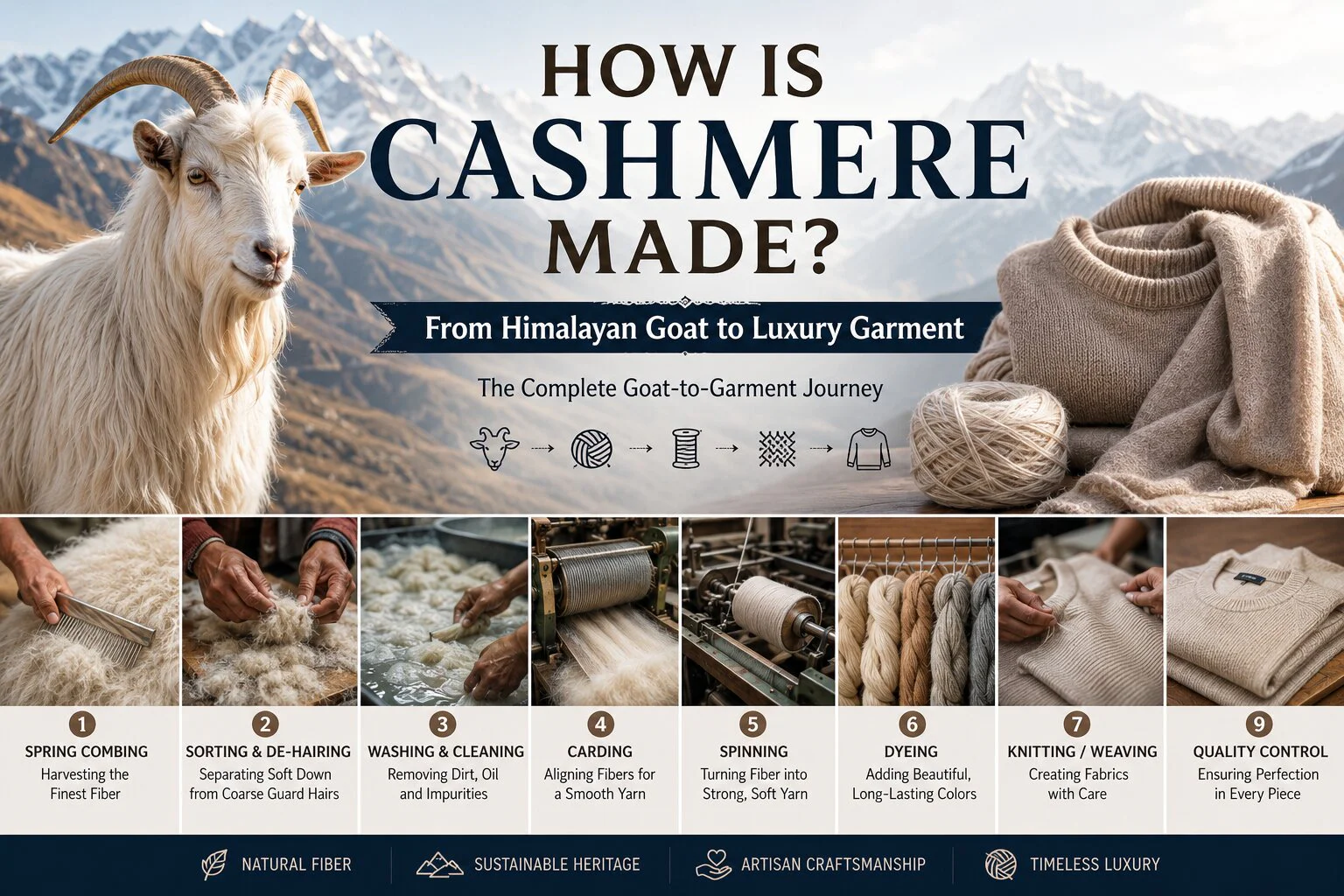
To understand cashmere ply, you first need to understand how yarn is made. Raw cashmere fibers — the fine, soft undercoat combed from cashmere goats — are spun into individual yarn strands. These strands, on their own, are called single-ply or 1-ply yarn.
When two strands are twisted together, you get 2-ply yarn. Twist three strands together and you have 3-ply, and so on.
The twisting process serves a practical purpose. It adds structural strength, increases bulk, and creates a more stable yarn that holds its shape when knitted into fabric.
The resulting ply count therefore affects the weight, thickness, and feel of the finished garment — but it says nothing about the quality of the underlying fiber.
Simple Definition of Cashmere Ply
Think of it this way:
- 1-ply means a single strand of yarn has been knitted directly into the fabric. The result is lightweight, delicate, and exceptionally soft when the fiber quality is high.
- 2-ply means two strands have been twisted together before knitting. This creates a more balanced yarn with greater strength and a fuller feel.
- 3-ply and above means three or more strands are combined, producing a heavier, warmer, and denser construction suited to colder climates and heavier-use applications like premium cashmere blankets.
That is the entirety of what ply means. Nothing more, nothing less.
Ply vs GSM vs Yarn Count
Ply is frequently confused with other measurements of fabric quality and weight.
GSM — grams per square metre — measures the density of the finished fabric
while yarn count describes how fine or coarse individual fibers are (typically expressed in microns for cashmere).
These are entirely separate metrics.
A garment can have a high ply count but low GSM if the knit structure is loose. Conversely, a tightly knitted 2-ply piece can feel substantially denser and warmer than a loosely knitted 3-ply one.
Understanding these distinctions prevents you from being misled by marketing language that presents ply as the definitive measure of luxury cashmere knitwear.
Cashmere Ply at a Glance: Comparison Table
| Ply | Weight | Warmth | Durability | Best For |
|---|---|---|---|---|
| 1-Ply | Lightweight | Mild | Moderate | Spring, layering, travel |
| 2-Ply | Medium | Warm | High | Everyday sweaters, cardigans |
| 3-Ply+ | Heavy | Very Warm | Very High | Winter wear, luxury blankets |
1-Ply, 2-Ply, and 3-Ply Cashmere Explained
Each ply count serves a different purpose and suits a different wardrobe need. Rather than ranking them from worst to best, it is more useful to think of them as tools designed for different jobs.
1-Ply Cashmere
One-ply cashmere is the lightest and most delicate construction available. When made with long, fine, high-quality fibers — as found in authentic Himalayan cashmere — it produces a fabric of extraordinary softness with a fluid, elegant drape that heavier constructions cannot replicate.
It sits close to the skin without bulk and breathes beautifully, making it ideal for warmer months or climates where full insulation is not required.
The reputation for fragility that 1-ply cashmere sometimes carries comes not from the ply count itself, but from poor fiber quality. A 1-ply piece made with short, low-grade fibers will pill quickly and lose its shape.
The same construction using premium long-fiber sustainable cashmere can be surprisingly resilient and long-lasting.
Best uses for 1-ply cashmere:
- Lightweight summer and spring scarves
- Fashion-forward layering pieces
- Travel wraps and shawls
- Delicate turtlenecks for mild weather
2-Ply Cashmere
Two-ply cashmere sits at the sweet spot of the ply spectrum and is widely considered the standard for everyday luxury cashmere knitwear.
The pairing of two yarn strands creates a fabric with significantly better structural integrity than 1-ply, while remaining light enough for year-round use in most climates.
The added strand improves resistance to pilling and stretching, ensures the garment holds its shape after washing, and creates a fuller, more substantial hand feel without tipping into heavy-winter-wear territory.
Most premium cashmere sweaters, cardigans, and beanies from reputable brands will be made to a 2-ply specification for exactly this reason.
Best uses for 2-ply cashmere:
- Premium everyday sweaters and cardigans
- Beanies and lightweight scarves
- Autumn and winter layering
- Office and smart-casual knitwear
3-Ply and Higher Cashmere
Three-ply and above enters the territory of serious warmth and substantial weight. The additional yarn strands trap more air within the knit structure, which is the primary mechanism by which cashmere insulates.
The result is a noticeably heavier garment with a dense, cushioned feel that communicates luxury in a very different way from the fluid drape of 1-ply.
At this weight, cashmere begins to function as genuine outerwear-grade insulation. Three-ply and above is also the standard for luxury cashmere blankets and throws, where warmth and longevity are the priority.
For those sourcing from a cashmere blanket manufacturer, 3-ply and above should be the baseline specification for any product intended to last.
Best uses for 3-ply and higher cashmere:
- Heavy winter sweaters and coats
- Luxury cashmere blankets and throws
- Cold-climate scarves and cowls
- Statement knitwear designed for harsh winters
Next-Step Read On yarn Construction : carded vs combed cashmere yarn
How Ply Affects Warmth and Durability
Warmth
The way cashmere keeps you warm is through trapped air. The fine fibers, when knitted together, create tiny pockets of air that act as insulation against the cold.
A higher ply count generally means more material, which means more air pockets and therefore better insulation — but the knit structure plays an equally important role.
A tightly knitted 2-ply fabric can outperform a loosely knitted 3-ply piece in warmth because the denser structure traps air more effectively.
This is why ply alone should never be your only consideration when evaluating how warm a premium cashmere sweater will be.
Durability
Higher ply generally improves durability. Two strands twisted together are naturally more resistant to abrasion, pilling, and stretching than a single strand.
The mechanical structure of the yarn is simply stronger. This is why 2-ply and above is recommended for everyday-use pieces like sweaters that will be worn frequently and washed regularly.
However — and this cannot be overstated — construction quality matters more than ply count.
A tightly spun, expertly crafted 1-ply piece made from long Grade-A fibers will outlast a loosely spun 4-ply sweater made from inferior short fibers many times over.
Weight and Feel
Each additional ply changes how a garment moves on your body. One-ply cashmere flows and drapes. Two-ply has structure but remains supple.
Three-ply and above feels substantial, settled, and anchored.
Neither experience is superior — they simply offer different pleasures.
Buyers who love the cloud-light feeling of a fine cashmere wrap may actively prefer 1-ply, while those who prize the enveloping warmth of a thick winter knit will gravitate toward 3-ply and above.
The Biggest Myth — Does Higher Ply Mean Better Quality?
No. This is the most important thing to understand about cashmere ply, and the most aggressively exploited misconception in the luxury textile market.
Higher ply means more yarn. More yarn means more cashmere fiber used in production, which does increase cost and does produce a warmer, heavier garment. But none of that tells you whether the fiber itself is any good.
A brand can produce a 4-ply cashmere sweater using low-grade, short staple fibers that pill after three washes, charge a premium price based on the high ply count, and leave the buyer feeling deceived.
This is not a rare scenario. It is a common commercial practice, particularly among fast fashion brands attempting to position themselves in the luxury segment.
What Actually Determines Cashmere Quality
The real indicators of cashmere quality have very little to do with ply:
Micron count measures the diameter of individual cashmere fibers. The finest cashmere typically falls between 14 and 16 microns. The lower the micron count, the finer and softer the fiber. Most luxury cashmere falls below 19 microns, and anything above that begins to feel noticeably coarser against the skin.
Fiber length determines how the yarn spins and how the finished fabric wears. Longer fibers produce smoother, more tightly spun yarn that resists pilling dramatically better than short-fiber yarn. Short fibers shed and pill because they are not sufficiently anchored within the yarn structure.
Grade-A classification is used to describe cashmere that meets the highest standards of both fiber length and fineness. Grade-A cashmere is the material used in genuinely premium luxury cashmere knitwear.
Sustainable and ethical sourcing matters both for the welfare of the animals and the quality of the fiber. Sustainable cashmere from well-managed herds in the Himalayas — particularly from Nepal and Inner Mongolia — is consistently finer and longer than fiber from overstocked, commercially pressured herds.
Knitting craftsmanship determines how well the yarn is transformed into a finished garment. Hand-framing and traditional knitting techniques produce a more even stitch with better elasticity and recovery than mass-production machine knitting.
Why Cheap High-Ply Cashmere Still Pills
If you have ever bought what was marketed as a luxury cashmere piece only to watch it pill within weeks, the explanation almost certainly lies in fiber quality rather than ply count. Short fibers — the byproduct of fast, cheap cashmere processing — are not anchored within the yarn structure.
As the fabric rubs against itself and other surfaces, these short fibers migrate to the surface and clump into the small bobbles known as pills.
Loose spinning compounds the problem. When yarn is spun without sufficient tension, the individual fibers have even less cohesion, and pilling accelerates.
No amount of ply will overcome these fundamental fiber and production quality issues.
Also Read: How To Remove Pilling From Cashmere
Best Cashmere Ply for Different Seasons
Choosing the right ply for the time of year transforms cashmere from a luxury indulgence into a genuinely practical wardrobe investment.
Spring and Summer
Lightweight 1-ply cashmere is the ideal companion for warmer months. It provides just enough warmth for cool evenings and air-conditioned environments without the weight or bulk of heavier constructions. A 1-ply cashmere shawl or lightweight sweater is one of the most versatile travel pieces you can own — packable, breathable, and effortlessly elegant.
Look for open, breathable knit structures in spring and summer cashmere. The combination of fine Himalayan cashmere fiber and light construction delivers softness against the skin without trapping heat uncomfortably.
Autumn
Midweight 2-ply cashmere is perfectly calibrated for the transitional months. As temperatures become unpredictable and layering becomes a daily necessity, the balanced warmth and structure of 2-ply earns its place as the most versatile cashmere specification in the wardrobe. A classic 2-ply premium cashmere sweater or cardigan moves effortlessly from a mild autumn afternoon to a cold evening without feeling excessive or insufficient.
Winter
When temperatures drop seriously, 2-ply remains functional in layered outfits, but 3-ply and above comes into its own. The additional insulation of a heavy 3-ply sweater means you need fewer layers beneath your outerwear, simplifying dressing without sacrificing warmth. For genuinely cold climates — the kind where temperatures fall well below freezing — 3-ply cashmere in a close-knit construction is the most comfortable and practical choice. This also applies to luxury cashmere blankets, which perform best at 3-ply and above when used in cold bedrooms or as primary throws.
Cashmere Ply and Price Differences
Why Higher Ply Costs More
The relationship between ply count and price is straightforward. More ply means more raw cashmere fiber has been used in the garment’s construction. Cashmere is one of the most expensive natural fibers in the world, so increasing the volume of fiber used directly increases production costs. Higher ply also requires longer knitting times and greater technical complexity, particularly in hand-framed or traditionally crafted luxury cashmere knitwear.
When Higher Price Is Worth It
Investing in a higher-ply cashmere piece makes clear practical sense in specific circumstances. If you live in a genuinely cold climate, the additional warmth of 3-ply cashmere is not a luxury — it is functional. If you are purchasing a premium cashmere blanket or throw intended for daily use across many years, the durability and insulating weight of 3-ply or above justifies the premium. And if longevity is your priority — buying fewer things of higher quality rather than replacing cheaper items repeatedly — then the additional material cost of higher-ply cashmere pays dividends over time.
When You May Not Need High Ply
Not every cashmere purchase warrants the highest possible ply count. If you primarily wear your cashmere indoors in a heated environment, the insulating benefits of 3-ply are largely wasted. If you live in a mild climate or are buying cashmere primarily for its softness and aesthetic appeal rather than serious warmth, a well-made 1-ply or 2-ply piece will serve you better and feel more comfortable against your skin. Fashion layering, where the visual and textural qualities of luxury cashmere knitwear are the point rather than its thermal performance, is another context where lighter ply is the more intelligent choice.
What Manufacturers Don’t Tell You About Cashmere Ply
Ply Can Be Used as a Marketing Tool
The average luxury goods consumer has been conditioned — through years of marketing language — to associate higher numbers with higher quality. Ply count is the textile industry’s version of this psychological shortcut. A brand that prominently advertises “4-ply cashmere” is leveraging the assumption that more must mean better, regardless of whether the underlying fiber supports that premium positioning.
This is not always dishonest. Genuinely high-ply Himalayan cashmere made with premium fiber is an exceptional product. But the ply number on its own gives you no information about what lies beneath it.
Some Brands Use Lower-Grade Fibers in Higher-Ply Products
One of the more cynical practices in the cashmere industry involves using high ply counts to disguise inferior fiber quality. Thick, bulky construction can mask the coarseness of lower-grade fiber that would be immediately apparent in a fine 1-ply fabric where the fiber’s qualities are fully exposed. A consumer who would immediately notice the scratchy hand feel of a thin cheap cashmere piece may not notice the same fiber quality issues when it is presented in a heavy, apparently luxurious 3-ply construction.
Softness Treatments Can Be Misleading
Many mass-market cashmere products undergo chemical softening treatments — most commonly silicone washing — that create an artificial softness during the purchase experience. This softness feels indistinguishable from the natural softness of fine cashmere fiber when you first handle the garment in a store or receive it as an online order. But it fades with washing, often disappearing entirely within the first two or three washes, leaving behind a fabric that feels coarser and less pleasant than the natural fiber quality it contains.
Genuine cashmere softness — the kind that comes from long, fine, naturally processed sustainable cashmere — does not diminish with washing. It improves.
The Importance of Transparency
The most trustworthy cashmere brands are those that willingly provide information about their fiber sourcing, micron counts, and production methods. Knowing that a piece is made from Himalayan cashmere sourced from a specific region, processed without aggressive chemical treatments, and crafted through traditional hand-knitting techniques gives you genuinely useful information. A brand that tells you only the ply count and asks you to make your judgment on that basis alone is telling you as little as possible.
How to Choose the Right Cashmere Ply for You
Making the right ply choice is ultimately a personal decision shaped by your circumstances and priorities. Work through the following considerations before you buy:
Climate: If you live somewhere with cold winters, prioritize 2-ply or 3-ply for your primary sweaters. If your winters are mild, 1-ply and 2-ply will cover your needs comfortably.
Intended use: Is this piece for outdoor wear in cold weather, casual indoor comfort, or fashion layering? Heavy outdoor use warrants heavier ply. Fashion and indoor comfort are better served by lighter constructions.
Layering needs: If you typically wear cashmere as part of a layered outfit over other garments, a lighter ply means you can add warmth through layering rather than through the single garment itself. If you want the cashmere piece to do the heavy lifting on its own, choose a higher ply.
Budget: Higher ply costs more because more fiber is used. If budget is a consideration, a beautifully made 2-ply piece from a brand with genuine transparency about its fiber quality is a more intelligent investment than a cheaper high-ply product of unknown fiber provenance.
Durability expectations: If this is a piece you intend to wear almost daily for many years, prioritize fiber quality above all else — and then choose the ply that suits your climate and use case.
Quick Buying Guide
| Use | Recommended Ply |
|---|---|
| Summer layering & travel | 1-ply |
| Spring & autumn wear | 1–2 ply |
| Everyday luxury sweaters | 2-ply |
| Harsh winter wear | 3-ply |
| Luxury blankets & throws | 3-ply+ |
Conclusion
Cashmere ply is a meaningful specification — but it is one piece of a much larger picture. It tells you about the weight, warmth, and structural character of a garment.
It does not tell you about the fineness of the fiber, the length of the individual strands, the ethics of the sourcing, or the craftsmanship that transformed raw material into finished luxury cashmere knitwear. Those factors are what separate cashmere that lasts a lifetime from cashmere that disappoints within a season.
The smartest cashmere buyers are those who look past the ply number and ask the harder questions: Where does this fiber come from?
What is its micron count? How was it processed and knitted?
A brand that can answer those questions with specificity and confidence is a brand worth trusting.
When cashmere is sourced from the high-altitude pastures of the Himalayas — combed with care from well-managed herds, processed without aggressive chemical intervention, and knitted by artisans who have spent their lives mastering their craft — the result is something genuinely exceptional.
Whether it is 1-ply or 3-ply, the quality of the foundation shines through in every wear. That is the premium cashmere worth investing in.
Frequently Asked Questions
Is 2-ply cashmere better than 1-ply?
Not necessarily — it depends entirely on your intended use and the season. Two-ply cashmere is warmer, more durable, and better suited to everyday wear in autumn and winter. One-ply cashmere is lighter, more fluid, and ideal for spring and summer layering or travel. Neither is inherently superior; they serve different purposes. What matters most in both cases is the quality of the fiber itself.
Does higher ply mean warmer cashmere?
Generally yes, but the relationship is not absolute. More ply means more material, which traps more air and provides better insulation. However, the knit structure plays an equally important role. A tightly knitted 2-ply sweater can be warmer than a loosely knitted 3-ply one. Ply and knit density together determine warmth.
Why is some high-ply cashmere still cheap?
Because ply count and fiber quality are entirely separate things. A manufacturer can produce a 4-ply cashmere sweater using low-grade, short-staple fibers and sell it at a price that appears competitive while using the high ply count as a quality signal. The fiber will pill, the fabric will lose its shape, and the softness — often artificially applied through chemical treatment — will fade. The price reflects the inferior fiber, not the ply count.
What ply is best for cashmere sweaters?
For most people in most climates, 2-ply is the most versatile and practical choice. It offers a good balance of softness, warmth, durability, and weight that works well across autumn and winter and in layered outfits throughout the year. If you live in a very cold climate and want a premium cashmere sweater that insulates on its own without layering, 3-ply is worth considering.
Is 1-ply cashmere durable?
Yes — when made with long, high-quality fibers. The reputation for fragility that surrounds 1-ply cashmere is a fiber quality problem, not a ply problem. Premium 1-ply Himalayan cashmere made from Grade-A long-staple fiber, properly cared for, will last for many years. Cheap 1-ply made from short, low-grade fibers will pill and deteriorate quickly — but the same is true of cheap cashmere at any ply count.
What is the best cashmere ply for blankets?
Three-ply or above is the standard for luxury cashmere blankets and throws. The additional weight and density of higher-ply construction provides genuine warmth for stationary use and creates the substantial, enveloping feel that makes a cashmere blanket worth the investment. A blanket also undergoes considerable wear over its lifetime, and the additional structural integrity of 3-ply and above means it will resist pilling and maintain its appearance far longer than a lighter construction. When sourcing from a cashmere blanket manufacturer, always confirm the ply count and ask for fiber micron and origin details before committing to a purchase.




Add comment
You must be logged in to post a comment.