

How to Source Premium Cashmere Wholesale from Nepal (2026 Buyer’s Guide)
The global demand for luxury knitwear has never been stronger, and Nepal has quietly emerged as one of the most sought-after destinations for premium cashmere manufacturing. From boutique fashion labels in Paris to private label brands in New York, international buyers are increasingly turning to Nepal for its rare combination of Himalayan craftsmanship, ethical production, and competitive wholesale pricing.
If you’re researching how to source cashmere wholesale from Nepal, this guide covers everything you need — from understanding yarn grades to vetting manufacturers, placing trial orders, and avoiding the most common sourcing mistakes.
Why Nepal Is Known for Premium Cashmere Manufacturing
Nepal’s reputation in the luxury knitwear industry is no accident. Nestled in the heart of the Himalayas, the country has centuries of textile tradition woven into its culture. Knitwear artisans here possess skills passed down through generations, producing pieces that blend technical precision with artisanal warmth that machine-heavy factories simply cannot replicate.
Himalayan Craftsmanship at Its Core
Nepal’s artisans are specialists. Unlike mass-production factories in other parts of Asia, Nepali manufacturers often work in smaller, more focused workshops where attention to detail is built into the process — not added as an afterthought. Hand-finishing, precise gauge control, and careful construction are standard practice here.
Competitive Pricing Without Compromising Quality
One of the primary reasons international brands choose Nepal over European manufacturers is cost efficiency. You get a product that rivals European quality at a significantly lower price point — making Nepal particularly attractive for emerging brands launching premium lines without prohibitive production costs.
Flexibility for Small and Growing Brands
Many Nepal-based manufacturers offer low-volume production flexibility that larger factories in China or Bangladesh often cannot accommodate. This makes Nepal an ideal starting point for boutique brands, private label startups, and fashion entrepreneurs who need premium quality without committing to massive minimum order quantities upfront.
Ethical Manufacturing Advantages
Nepal’s knitwear sector has earned recognition for its ethical labor practices. With increasing global scrutiny on supply chain transparency, sourcing from Nepal allows brands to align with slow fashion values, support artisan livelihoods, and market their products with a genuine ethical story behind them.
Understand the Difference Between Cashmere Grades
Before you reach out to a single supplier, you need to understand what you’re buying. Cashmere quality varies significantly, and knowing how to assess it will protect you from overpaying for inferior fiber or purchasing blended materials marketed as pure cashmere.
Grade A vs. Lower Grades
| Feature | Grade A Cashmere | Grade B / C Cashmere |
|---|---|---|
| Micron Count | 14–15.5 microns | 16–19+ microns |
| Fiber Length | Long (36mm+) | Shorter fibers |
| Softness | Extremely soft, ultra-fine | Noticeably coarser |
| Pilling Resistance | High | Lower |
| Durability | Excellent | Moderate to low |
| Price | Premium | Lower |
| Best For | Luxury retail, fine knitwear | Budget knitwear, blends |
What Is Micron Count?
Micron count refers to the diameter of individual cashmere fibers. The lower the micron count, the finer and softer the fiber. Grade A cashmere typically falls between 14 and 15.5 microns. Anything above 18 microns starts to feel noticeably rough against skin.
Yarn Ply: What It Means for Your Product
Ply refers to the number of individual threads twisted together to form the yarn. A 2-ply cashmere is lighter and more delicate, ideal for fine layering pieces. A 4-ply or higher offers warmth and durability, better suited for chunky knitwear, outerwear, or blankets.
Understanding yarn ply is essential when placing wholesale knitwear orders. Always clarify with your supplier what ply they use and how it aligns with your intended end product and market positioning.
Fiber Length Matters
Longer cashmere fibers are more durable and resistant to pilling — the small fuzz balls that form on lower-quality knitwear after washing. Short fibers may feel soft initially but degrade quickly. Ask your supplier for fiber length specifications and request lab testing results if you’re sourcing at scale.
Pure Cashmere vs. Blended Cashmere
Some suppliers offer cashmere blended with merino wool, silk, or acrylic to lower costs. Blends are not inherently bad — a cashmere-silk blend can be beautiful — but you must know exactly what percentage of cashmere you’re receiving. Always request a full yarn composition breakdown in writing before committing to production.
Mongolian vs. Nepali Cashmere
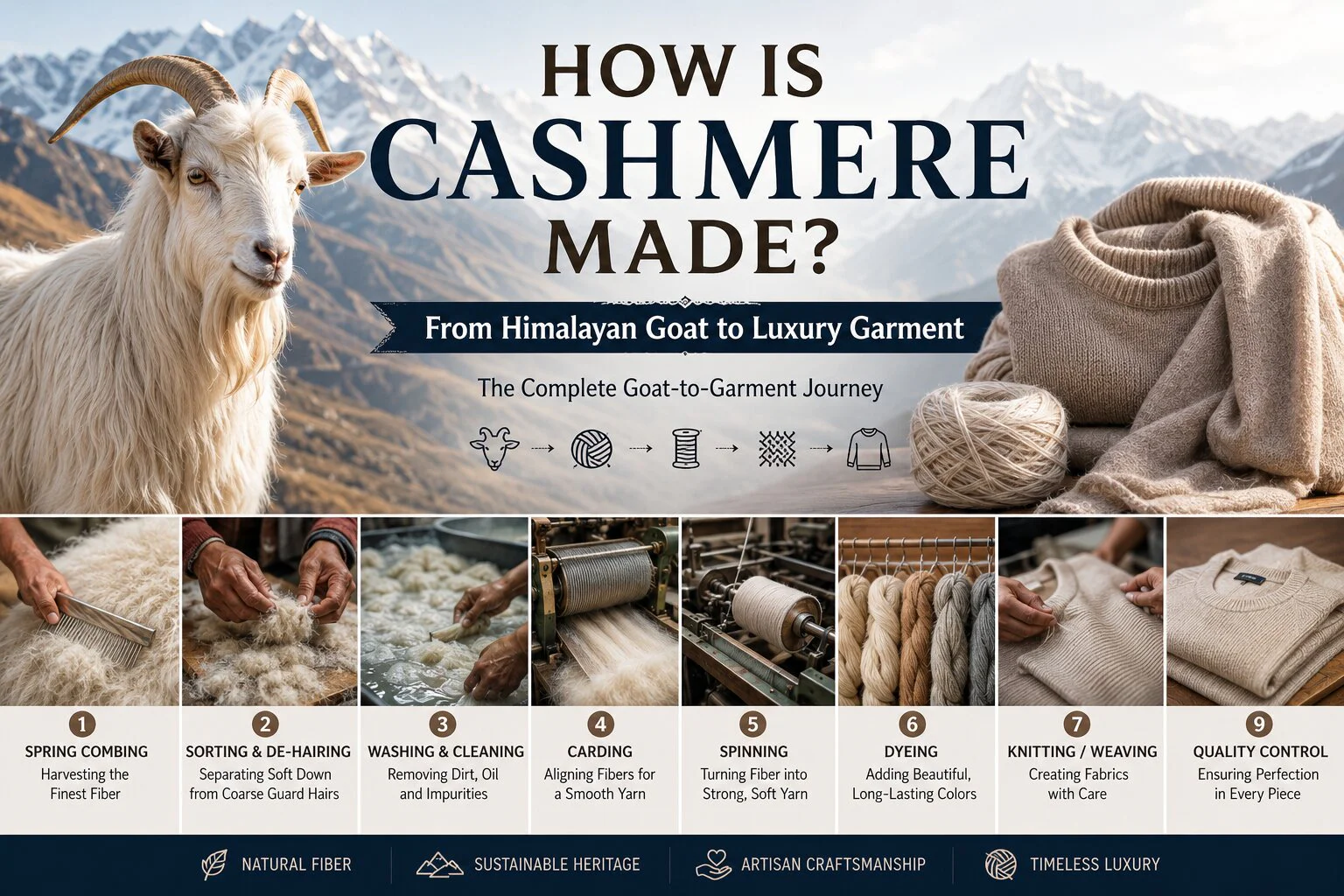
Most raw cashmere fiber originates in Mongolia or Inner Mongolia. Nepal manufacturers import this raw fiber and transform it into yarn and finished garments. The craftsmanship, finishing, and artisanal skill are what set Nepali products apart — and a reputable manufacturer will always be transparent about their fiber sourcing.
How to Source Cashmere Wholesale from Nepal Safely and Reliably
This is the section that can make or break your sourcing experience. The Nepali knitwear market includes excellent manufacturers — but also brokers, middlemen, and low-quality operations that target price-sensitive buyers. Here’s how to separate the best from the rest.
Factory Transparency
A trustworthy manufacturer will invite you to visit their facility (or offer a virtual tour), share photos of their production floor, and discuss their processes openly. Opacity at this stage is a serious red flag.
Certifications and Compliance
Look for suppliers with certifications such as OEKO-TEX Standard 100 (tests for harmful substances), SA8000 (social accountability), or documentation showing compliance with international labor standards. Any documentation they provide signals commitment to ethical production.
Sampling Process
Professional manufacturers offer a structured sampling process. They will produce a pre-production sample based on your specifications before bulk production begins. Be cautious of any supplier who discourages sample requests or pushes you to skip this step.
Communication Quality
Pay close attention to how a supplier communicates. Are they prompt, clear, and professional? Do they ask clarifying questions about your specs, or do they simply agree to everything without discussion? Over-eager, vague responses often indicate inexperience or dishonesty.
MOQ Flexibility
Minimum order quantities in Nepal tend to be more flexible than in China or Bangladesh. A reputable manufacturer serving boutique brands may offer MOQs as low as 30–50 pieces per style, though this varies by product type and complexity.
Export Experience
Ask about their export history. Which countries do they ship to? Do they have experience with customs documentation, commercial invoices, packing lists, and certificates of origin? Export-experienced manufacturers handle logistics far more smoothly.
Production Timelines
A reliable manufacturer will give you honest, realistic timelines — not the shortest possible lead time just to win your order. Cashmere production takes time, and rushed timelines often result in quality compromises.
Questions to Ask a Cashmere Wholesale Supplier in Nepal
Before signing any agreement or placing a deposit, get clear answers to each of the following:
- Do you manufacture in-house, or do you outsource production?
- Can you provide full yarn composition details in writing?
- What is your minimum order quantity per style and per color?
- Do you offer OEM or private label production?
- Can you share references or previous export markets?
- What certifications do you currently hold?
- What is your standard sampling lead time?
- How do you handle quality issues after shipment?
- What are your payment terms?
- What shipping methods and Incoterms do you work with?
Request Samples Before Bulk Production
This step is non-negotiable. No matter how impressive a supplier’s catalog looks, you must physically evaluate samples before committing to a full production run. Premium cashmere sourcing should never skip this stage.
What to Evaluate in a Sample
Softness and Hand Feel: Rub the fabric against your neck and inner wrist — the most sensitive areas. Grade A cashmere should feel immediately smooth and cloud-like with no prickling.
Stitching and Construction Quality: Examine seams, ribbing, collars, and cuffs closely. Look for even tension throughout the garment. Dropped stitches, uneven rows, or loose ends are signs of poor craftsmanship.
Color Consistency: If ordering multiple pieces in the same color, confirm the sample matches your approved color standard (Pantone or physical swatch).
Wash Testing: Wash the sample according to the care instructions. Measure dimensions before and after. Quality cashmere should shrink no more than 3–5% and should not lose its shape or softness significantly after washing.
Pilling Test: Rub two pieces of the fabric together briskly for 30 seconds. Excessive pilling at this stage suggests lower-quality fiber with shorter staple length.
The cost of a sample order is minimal compared to the loss from a full bulk production run of substandard product. Never skip it.
Understanding MOQ, Pricing & Lead Times
Understanding the business realities of Nepali cashmere manufacturing will help you plan accurately and avoid surprises.
Typical MOQs in Nepal
| Product Type | Typical MOQ |
|---|---|
| Cashmere Sweaters (simple styles) | 30–100 pieces per style/color |
| Cashmere Shawls / Scarves | 50–100 pieces per design |
| Cashmere Beanies / Accessories | 50–100 pieces per style |
| Cashmere Blankets / Throws | 30–50 pieces per design |
| Complex OEM / Custom Designs | 100–300 pieces per style |
MOQs vary by manufacturer, yarn complexity, design intricacy, and finish level. Manufacturers serving boutique brands often negotiate lower MOQs for first orders, especially when the buyer signals long-term partnership potential.
What Affects Cashmere Wholesale Pricing
Several factors influence the final wholesale price per piece:
- Yarn grade and ply: Grade A, 2-ply cashmere costs significantly more than blended or lower-grade alternatives.
- Gauge: Finer gauge knitting requires more skilled labor and time.
- Hand-finishing: Fully hand-finished garments carry a premium over machine-sewn finishes.
- Embroidery and embellishments: Custom logos, embroidered patterns, and decorative elements add to production time and cost.
- Custom labeling and packaging: Private label tags, woven labels, hang tags, and custom packaging all carry associated costs.
- Order volume: Larger orders generally attract better per-unit pricing.
Realistic Lead Times
| Stage | Typical Timeframe |
|---|---|
| Sampling | 2–4 weeks |
| Sample revisions | 1–2 weeks per round |
| Bulk production (post-approval) | 6–10 weeks |
| Air shipping | 3–5 days |
| Sea shipping | 25–35 days |
Plan for a total lead time of 3–4 months from initial contact to goods received, especially for your first order with a new manufacturer.
Common Mistakes Buyers Make When Sourcing Cashmere from Nepal
These are the pitfalls that cost buyers the most time, money, and brand reputation.
1. Choosing Suppliers Based on Price Alone The lowest quote almost never means the best value. Extremely low prices signal compromised yarn quality, poor finishing standards, or hidden costs added later. Always compare quotes in the context of yarn grade, ply, and included services.
2. Ignoring Yarn Composition Accepting vague descriptions like “100% cashmere” without requesting documented fiber specifications is a costly mistake. Always ask for a yarn composition certificate or third-party lab test results.
3. Skipping Quality Checks Relying solely on photos and video calls without requesting physical samples is a recipe for disappointment. Tactile evaluation is essential for cashmere — there is no substitute.
4. Providing Unclear Sizing Specifications Nepal manufacturers produce for global markets. Provide detailed tech packs with graded measurements for every size in your range. Ambiguous specs lead to expensive re-sampling and production delays.
5. Not Confirming Shipping Terms Misunderstandings around Incoterms (FOB, CIF, EXW, etc.) can result in unexpected freight charges, customs complications, or liability disputes. Always clarify and document shipping terms before production begins.
6. Rushing the Supplier Pressuring manufacturers into unrealistic timelines often results in corners being cut during production. Build adequate lead time into your buying calendar from the start.
7. Not Building Long-Term Relationships Treating each order as a one-time transaction means missing out on priority production slots, better pricing, and the goodwill that comes from consistent repeat business.
Sustainable & Ethical Cashmere Manufacturing in Nepal
Sustainability is no longer a buzzword — it is a purchasing criterion for a growing share of global consumers, and Nepal’s knitwear industry naturally lends itself to responsible sourcing.
Slow Fashion and Artisan Support
Nepali manufacturers often operate as small-to-medium enterprises, directly employing skilled local artisans and their families. Sourcing from these manufacturers directly supports communities and preserves traditional craft skills that would otherwise be lost to industrialization.
Ethical Labor Standards
Nepal has made meaningful strides in labor rights protections within its textile sector. Many established manufacturers comply with fair wage standards, provide safe working conditions, and maintain reasonable working hours — particularly those exporting to the EU, UK, and USA.
Longevity as Sustainability
High-quality cashmere is inherently sustainable. A well-made cashmere sweater lasts decades with proper care — far outlasting fast fashion alternatives. When you source premium cashmere, you invest in a product that reduces waste by design.
Eco-Conscious Production
Forward-thinking Nepali manufacturers are increasingly adopting low-impact dyes, responsible water use, and waste-reduction practices. Ask your supplier about their environmental commitments when vetting partners.
Positioning your brand as sourced from ethical Nepali artisans is not just good marketing — it is an accurate and powerful story to tell.
Why Brands Choose Nepal for Private Label Cashmere Production
Private label production — where garments are manufactured to your specifications and branded under your label — is one of the strongest growth areas in Nepal’s knitwear export sector.
Full Customization
Reputable Nepal manufacturers offer end-to-end customization: yarn color, stitch pattern, gauge, silhouette, sizing, labels, tags, and packaging. You can bring a design from sketch to finished product entirely in one place.
Boutique Brand Support
Nepal manufacturers are experienced in working with smaller emerging brands. They understand the needs of boutique buyers — flexibility, communication, and the ability to scale gradually as your business grows.
Range of Products Available
Nepal’s knitwear expertise extends well beyond sweaters. Private label cashmere products include:
- Crewneck and V-neck sweaters
- Turtlenecks and mock-neck styles
- Wrap cardigans and open-front styles
- Cashmere shawls and wraps
- Scarves and stoles
- Beanies and slouchy hats
- Cashmere blankets and throws
- Matching lounge and co-ord sets
Direct Manufacturer Communication
Working directly with a manufacturer — rather than through an import agent or trading company — gives you greater control over quality, faster problem resolution, and clearer communication. It also typically results in better pricing since there are no middlemen taking margins.
Wholesale Cashmere Sourcing Checklist
Use this checklist before placing any bulk order with a Nepal cashmere supplier:
- Verify full yarn composition in writing
- Request and evaluate physical samples
- Confirm MOQ and per-unit pricing
- Clarify lead times for sampling and bulk production
- Review Incoterms and shipping terms
- Conduct wash and pilling tests on samples
- Check supplier’s export history and references
- Confirm private labeling and packaging options
- Start with a trial order before scaling volume
- Document all agreements in writing
Final Tips for Successfully Sourcing Cashmere Wholesale from Nepal
Start Small Even if your long-term vision involves large volumes, begin with a smaller trial order to verify quality, timelines, and supplier reliability before scaling.
Verify Yarn Quality Independently For high-value orders, send samples to a third-party textile testing lab to confirm fiber composition, micron count, and tensile strength. This small investment removes all guesswork.
Build Long-Term Supplier Relationships The best Nepali manufacturers have waiting lists. Being a consistent, respectful, and prompt-paying client earns you priority access to production slots, willingness to accommodate custom requests, and proactive communication.
Prioritize Consistency Over the Lowest Price A supplier who delivers consistent quality across every order is worth far more than one who quotes 10% cheaper but delivers inconsistently. Consistency protects your brand reputation.
Document Everything From sample approval photos to production spec sheets to shipping agreements — keep a clear paper trail for every order. This protects both parties and simplifies dispute resolution.
Visit When Possible If your order volumes justify it, visiting your Nepal manufacturer in person is one of the best investments you can make. It builds trust, allows direct facility inspection, and communicates the seriousness of your partnership.
Frequently Asked Questions
How do I source cashmere wholesale from Nepal as a small brand?
Start by identifying manufacturers who specifically cater to boutique brands and offer flexible MOQs. Reach out with a clear brief, request samples, and begin with a small trial order. Nepal manufacturers are generally open to working with emerging labels, particularly those showing long-term partnership potential.
Is cashmere from Nepal authentic?
Yes. Nepal is one of the world’s most respected cashmere knitwear manufacturing destinations. While the raw fiber is typically sourced from Mongolia, the artisan production, hand-finishing, and quality standards in Nepal are internationally recognized and trusted by luxury brands globally.
Why do luxury brands source cashmere from Nepal?
Luxury brands are drawn to Nepal for its combination of artisan craftsmanship, ethical production standards, competitive pricing compared to European manufacturers, and the flexibility to accommodate custom and small-batch production. The quality-to-value ratio is difficult to match elsewhere.
What is Grade A cashmere?
Grade A cashmere refers to fiber with a micron count of 14–15.5 and a staple length of 36mm or more. It is the finest, softest, and most durable grade available, used in premium knitwear. Grade B and C cashmere has coarser, shorter fibers and a lower price point, but also lower quality and longevity.
Can small brands source cashmere wholesale from Nepal?
Absolutely. Nepal is one of the most small-brand-friendly sourcing destinations in the world. Many manufacturers offer MOQs starting from 30–50 pieces per style, making it accessible for boutique startups and independent labels that cannot commit to the large minimums required by factories in other countries.
Is Nepal better than China for cashmere manufacturing?
Nepal and China each have their strengths. Chinese factories often offer lower per-unit costs at very high volumes. Nepal excels in artisan quality, ethical production, hand-finishing, and flexibility for smaller orders. For premium, boutique, or private label cashmere production, Nepal is generally the preferred choice among quality-focused global brands.
What is the difference between cashmere and pashmina?
Pashmina refers specifically to the fine wool from the Changthangi goat of the Himalayan plateau, traditionally hand-spun and woven rather than knitted. Cashmere is a broader term for fine fiber from cashmere goats. All pashmina is a form of cashmere, but not all cashmere is pashmina. In common trade usage, “pashmina” typically refers to large woven shawls, while “cashmere” is used more broadly for knitwear and luxury fiber products.
Ready to Source Premium Cashmere Wholesale from Nepal?
Whether you’re launching a boutique knitwear label or scaling an established fashion brand, choosing the right manufacturing partner is the most critical decision you’ll make.
At Diamond Knitland, we specialize in:
- Grade A cashmere knitwear for global fashion brands
- Private label manufacturing with full customization
- Low MOQ production for boutique and emerging labels
- Custom knitwear development from concept to finished product
- Reliable global export with full documentation support
We work with brands worldwide to create premium sweaters, shawls, scarves, beanies, and complete luxury knitwear collections — all made in Nepal to the highest standards.
Contact us today to discuss your wholesale cashmere sourcing needs




Add comment
You must be logged in to post a comment.